Cycling in May 2026: the small-country revolution at the top of the peloton

May is the month European cycling becomes serious. The cobbled classics are done, Eschborn–Frankfurt opens the road-race calendar’s grown-up phase, the Giro d’Italia rolls out, and the Tour de France looms six weeks away. The story of the 2026 season so far isn’t a team or a race — it’s a postcode. Two nations with a combined population of eight million are dictating the modern peloton, and May is the month their grip either tightens or loosens for the rest of the year.
Slovenia’s improbable third decade at the top
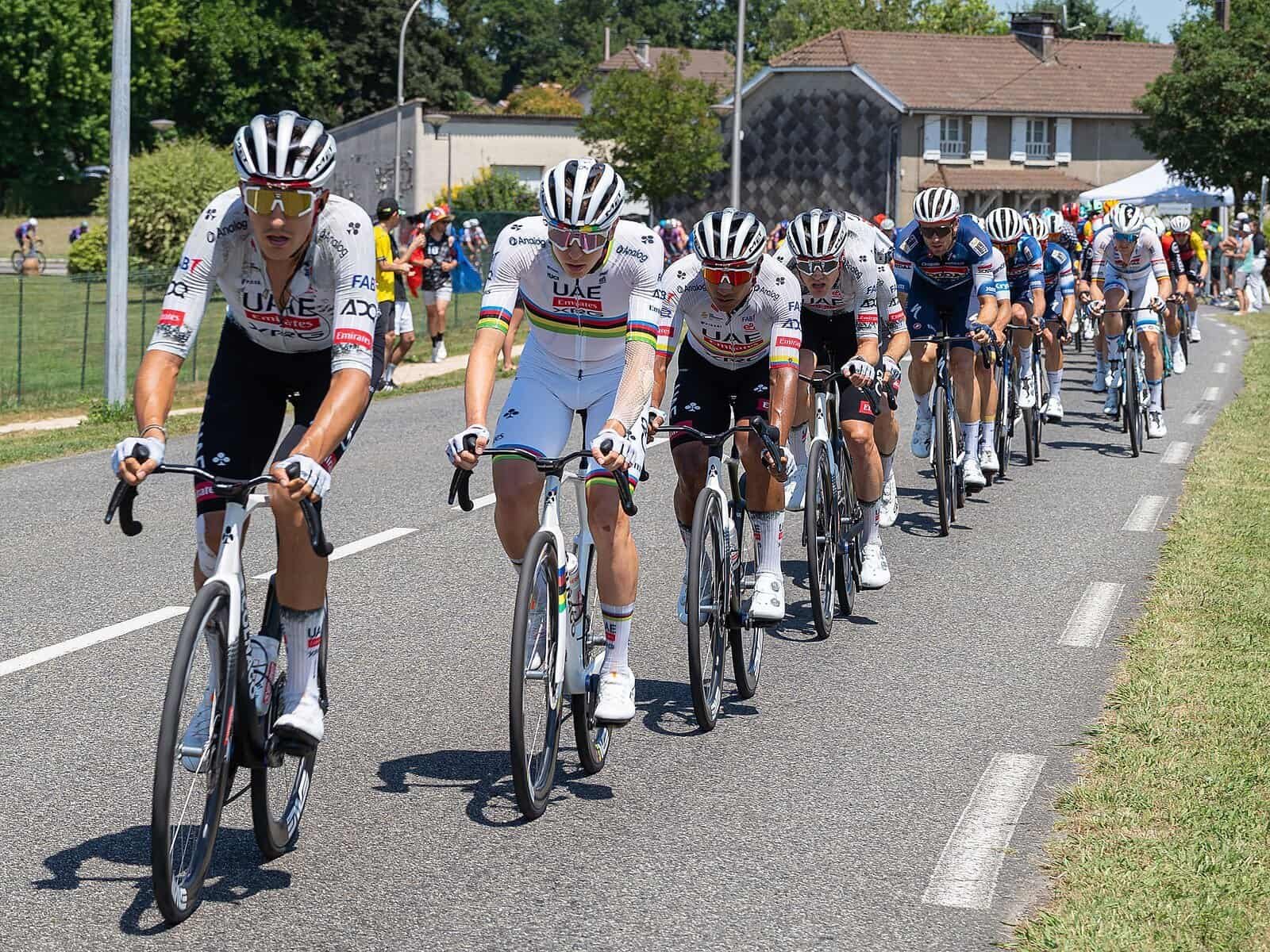
A country of two million people now produces the most consistent Grand Tour winner of his generation, a multi-time former world No. 1 in his veteran phase, and a deep bench of classics specialists. That is not a normal distribution of cycling talent, and it isn’t an accident either. Slovenian cycling has been built deliberately over twenty-five years: a national federation that consolidated junior pathways after independence, a domestic calendar that exposes teenagers to high-altitude training without sending them abroad, and a sport-science culture that took the Eastern European altitude-camp tradition and married it to Western nutrition and biomechanics. Tadej Pogačar is the visible product. Primož Roglič, Matej Mohorič, and the next wave of riders coming through Bahrain Victorious and UAE Team Emirates are the structural one.
What May tells us is whether the dominance is still a one-man story or whether the bench has matured. The first week of the Giro d’Italia traditionally surfaces the next Slovenian climber before the world has named him. Pay attention to the team time trial and the first mountain stage — that’s where the second-tier Slovenian talent makes itself visible.
Denmark’s quiet machine
If Slovenia is the headline, Denmark is the slow-build counterpart. Jonas Vingegaard’s two Tour de France wins (2022 and 2023) were not isolated peaks; they were the visible apex of a national cycling system that started restructuring after Bjarne Riis-era credibility damage and is now arguably the best-funded development pipeline north of the Alps. Mads Pedersen at Lidl–Trek, Mikkel Bjerg as time-trial specialist, the broader Visma–Lease a Bike Danish contingent — Denmark in 2026 is producing not stars but specialists, the kind of depth that lets a small federation place riders across all four cycling disciplines simultaneously.
The Danish question for May is whether Vingegaard’s spring form translates into Giro performance — historically he has skipped the Giro for direct Tour preparation, but the form he carries into Romandie and the Critérium du Dauphiné is the early indicator of whether the July rivalry against Pogačar tightens to within the seconds it lived in for two years, or whether the gap that opened after Vingegaard’s 2024 Itzulia crash widens permanently.
Why May is the inflection point — not July
Casual cycling fans circle July. Serious ones circle May. The Giro d’Italia is the only Grand Tour where the leader’s red jersey changes hands four or five times before the final week — Italian terrain rewards aggression, the weather is unpredictable, and the early summit finishes punish riders who arrived under-cooked. By the end of May, the cycling press has identified the season’s three real Tour de France contenders, and one of them is usually a name that wasn’t on anyone’s radar in March.
What we’ll know by 1 June 2026: whether Pogačar’s UAE machine has any cracks, whether Vingegaard is back to within seconds of him, and whether the third name — historically Belgian, Colombian, or Ecuadorian — instead emerges from somewhere unexpected. Watch Norway’s young sprint-puncheurs and the next wave of Spanish climbers from the Movistar academy. The Iberian peninsula is the only region with the population, calendar, and infrastructure to challenge the Slovenia-Denmark duopoly long-term, and a Spanish surprise in the Giro would tell us 2027 will be a more crowded podium than 2026.
The eight-million-people footnote
Combined, Slovenia and Denmark are smaller than the Paris metropolitan area. They produce more Grand Tour podiums than France, more time-trial world champions than Italy, and a higher per-capita ratio of professional riders than any other pair of nations in cycling history. That isn’t talent — talent is randomly distributed. It’s policy, culture, and the willingness of two small federations to do twenty-year planning while bigger nations chased four-year results. The cycling worth watching in May 2026 is the cycling that asks whether anyone else has noticed.
The latest UCI World Tour results and the May fixtures are tracked live on our Latest Cycling Results page. We update the status piece on the first Monday of each month.