Football in May 2026: UEFA Champions League Final, Premier League Dominance and the New Geography of European Football

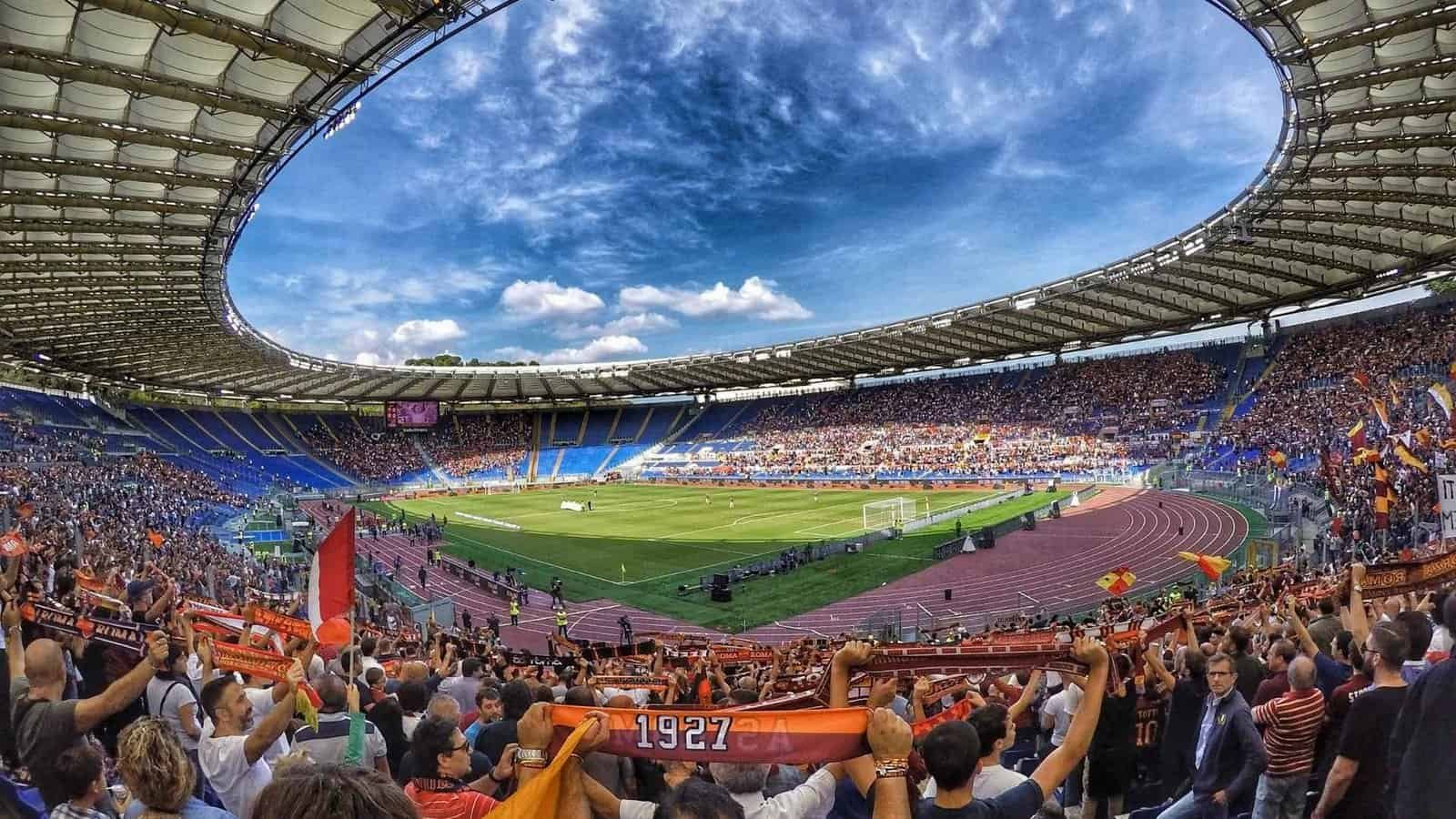
The UEFA Champions League final is at the Puskás Aréna in Budapest on May 30 — the second time in three years it lands east of the historical Madrid-Munich-London axis. The semi-finals settle in early May. The biggest single sporting event in the world annually and the most-watched club football match arrives in a season where the Premier League holds five of the eight quarter-final places, La Liga holds two, and the broader European football economy is more concentrated than at any point in the modern era. The story of football in May 2026 is the story of where talent now goes, not where it comes from.
Premier League economics — and what May reveals about them
The Premier League now spends more on player wages than La Liga, the Bundesliga, and Serie A combined. That gap, sustained for a decade, has produced the inevitable result: the best players from every European league migrate to England by 25, and the European competitions are increasingly a Premier League cup against itself with token continental opposition. Five Premier League clubs in the Champions League quarter-finals is not an outlier; it is a structural fact.
What May tells us is whether the structural fact has yet produced a structural winner. The Premier League has won four of the last six Champions Leagues, but no single club has dominated. Manchester City’s 2022/23 win, Real Madrid’s 2023/24 retort, and the open seasons since suggest the financial dominance has bought the league depth but not a perennial European champion. The 2026 final is the testing ground: if a Premier League side wins in Budapest, the spell continues; if Real Madrid or Bayern win, the conversation about whether English football is genuinely the dominant ecosystem starts again.
The Spanish technical school in slow decline
La Masía, Real Madrid’s Cantera, the Valencian and Sevillan academies — for two decades, Spain produced the world’s best technical footballers from a coaching tradition built around small-sided games, ball retention, and tactical positional discipline. The 2010-2014 Spanish national team was the visible apex; FC Barcelona’s tiki-taka was the cultural artefact. In 2026, that tradition is still producing top-tier players — Pedri, Gavi, Lamine Yamal at Barcelona; Vinicius and Bellingham as adopted Real Madrid talents — but the structural advantage has narrowed. Spanish clubs no longer reliably out-pass English opponents in big games. The gap closed not because Spain got worse but because everyone else, including the Premier League’s now-multinational coaching staff, learned the lessons.
For May, the question is whether Real Madrid and Barcelona reach the semi-finals as the natural Spanish carriers, or whether the technical-school inheritance is now distributed too broadly across European football to point to any one nation. The semi-final draw will tell us. Watch which Spanish team — if any — survives into early May.
The new geography — France, Norway, and the Scandinavian wave
What is genuinely new in 2026 is where the Premier League’s best players are coming from. Erling Haaland (Norway) at Manchester City, Martin Ødegaard (Norway) at Arsenal, Kylian Mbappé (France) at Real Madrid via PSG, William Saliba (France) at Arsenal, Aurélien Tchouaméni (France) at Real Madrid, plus the Italian and Portuguese contingents — the Premier League’s elite is increasingly a French academy + Scandinavian pipeline + Iberian polish operation. Spain produces the technique, France produces the volume, Scandinavia produces the physical-tactical intelligence. England buys all three.
The Norwegian story specifically is worth tracking. Norway has fewer than six million people. It has produced two of the Premier League’s top-five attacking talents in five years. The Norwegian Football Federation’s Top Sport School programme — which intentionally fast-tracks elite teenagers into Norwegian top-flight football at 16 — has structurally outperformed the inherited football culture of Italy, Germany, and the Netherlands at producing transfer-market-grade talent. The five-Premier-League-clubs-in-the-CL-quarters phenomenon is also the four-Norwegian-internationals-on-CL-rosters phenomenon.
What to watch in May
The semi-finals (May 5–6 first legs, May 12–13 second legs). If both finalists are Premier League sides, the 2026 Champions League final becomes a Premier League civil war on neutral turf — interesting for the trophy but uninteresting for the wider question of European competitive balance. If at least one of Real Madrid, Bayern, Inter, or PSG reaches the final, the question of whether English clubs can win in continental finals (where the broadcast money advantage is less translated) gets tested in front of 65,000 in Budapest.
The Premier League title race, which historically settles by May 24. Manchester City’s spell of dominance is in question for the first time in seven years. The new champion — whoever that is — sets the conversation for the 2026/27 season’s Champions League.
The Norwegian and French academy graduates on the pitch. Watch the player-of-the-tournament conversation if the final is Real Madrid–Manchester City, the most likely heavyweight pairing. The MVP of the modern Champions League final is statistically more often a French international than an English one. That is the talent geography in plain sight.
Follow Champions League Final on World Sports Talk
Live Premier League and Champions League results, plus the Budapest final, are tracked on our Latest Football Results page. We update this status piece monthly. UEFA homepage