
Diego Maradona, when soccer reached an unsurpassed interest
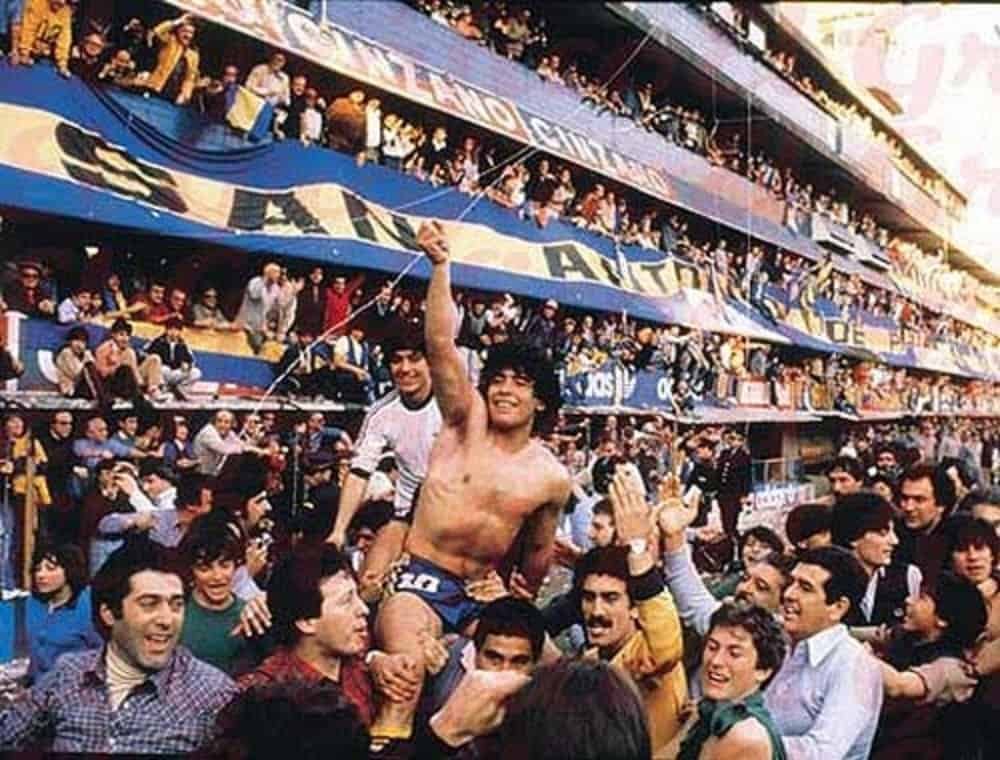
Diego Maradona: four minutes in Mexico City, and everything he was
Type: The Immortals #4 · Category: The Immortals, Football · Publish: Wed 25 Nov 2026
Diego Maradona died on 25 November 2020, aged 60. Six years on, he is still the footballer people argue about most: the greatest of all for some, a warning for others. The argument never ends because he was both, often in the same afternoon.
The moment that defines him
Estadio Azteca, Mexico City, 22 June 1986. World Cup quarter-final, Argentina against England, four years after the Falklands War. The game is goalless at half-time.
Six minutes after the break, Maradona goes up for a looping ball with England goalkeeper Peter Shilton, who is eight inches taller. Maradona punches the ball into the net. The referee does not see it. Afterwards Maradona calls it “a little with the head of Maradona and a little with the hand of God”.
Four minutes later, he picks up the ball in his own half, turns, and runs. He goes past Peter Beardsley, Peter Reid, Terry Butcher, Terry Fenwick, Butcher again, then Shilton, and scores. In 2002, a FIFA online poll voted it the goal of the century.
The cheat and the genius, four minutes apart. Argentina won 2–1 and went on to win the World Cup.
What he changed
He showed that one player could carry a team to a world title. Argentina in 1986 were a good side, not a great one. Maradona scored five goals and set up five more. No player since has dominated a World Cup so completely.
He made a small club the best in Italy. When Maradona joined Napoli in 1984, the club had never won the Serie A title. With him they won it twice, in 1987 and 1990, plus the UEFA Cup in 1989. For the south of Italy, long looked down on by the rich north, it was more than football. Napoli’s stadium now carries his name.
He made the No. 10 a myth. Before Maradona, the No. 10 was a playmaker. After him, it was a promise: the one player who can change anything. Every Argentine No. 10 since, Lionel Messi included, has been measured against him.
The number that still stands
10 of 14. At the 1986 World Cup, Maradona scored or set up ten of Argentina’s 14 goals. That share of a champion team’s goals has not been matched since.
The road to Mexico
Maradona was famous before he was a man. He made his debut for Argentinos Juniors ten days before his 16th birthday, and by his late teens he was the best player in Argentina. César Luis Menotti still left him out of the 1978 World Cup squad, judging him too young. A year later Maradona won the World Youth Championship in Japan as captain.
Barcelona paid a world-record fee for him in 1982. The two years in Spain were the bad start of a pattern. He caught hepatitis, then had his ankle broken by a tackle from Athletic Bilbao’s Andoni Goikoetxea. His last game for the club, the 1984 Copa del Rey final against Bilbao, ended in a mass brawl in front of the King.
Napoli bought him that summer, again for a world-record fee, and a full stadium came just to watch him be presented. He arrived in Mexico two years later at 25, already shaped by everything that would follow: the genius, the fights with authority, and a city that treated him as a saint.
What people get wrong about him
The first mistake is to separate the two goals: to remember the genius and file the handball under mischief, or to remember the cheating and dismiss the rest. They belong together. The same instinct to take anything he could, against any authority, made both.
The second mistake is to treat the decline as a footnote. Maradona was banned for 15 months in 1991 after testing positive for cocaine in Italy. He was sent home from the 1994 World Cup after a positive test for ephedrine. His addiction shaped half his life, and he spoke about it openly in later years. A portrait that leaves it out is a statue, not a person.
The third mistake is to think of him as finished as a player in 1986. At the 1990 World Cup, carrying an ankle injury and a weaker team, he still took Argentina to the final.
The career in brief
- Born: 30 October 1960, Lanús, Buenos Aires; grew up in Villa Fiorito
- Clubs: Argentinos Juniors, Boca Juniors, Barcelona, Napoli, Sevilla, Newell’s Old Boys, Boca Juniors
- Argentina: 91 caps, 34 goals
- World Cup: winner 1986 (captain), runner-up 1990
- Napoli: Serie A 1987, 1990; UEFA Cup 1989
- Died: 25 November 2020, Tigre, aged 60
Where to go next
Watch the second goal against England in full, then watch it again following only the England players. Then watch Napoli’s title-winning season of 1986–87, to see what he meant to a city rather than a country.
Next week in The Immortals: Nadia Comăneci.
Eight sites, one family — travel, wine, sport and sharper thinking. Explore the rest of the universe.


