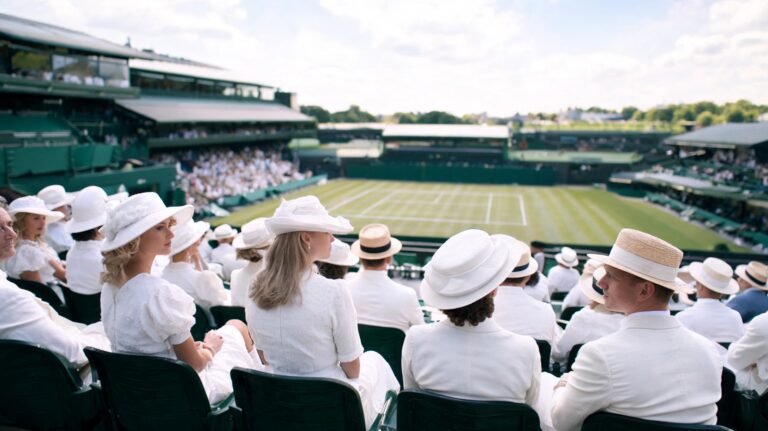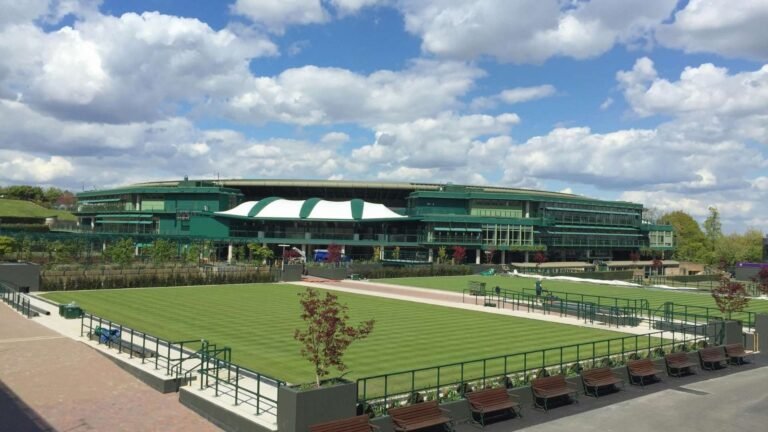
The French Open begins on May 24. For the first time since the late 1970s, the men’s draw at Roland Garros will be led by two players from neighbouring Mediterranean countries — Carlos Alcaraz of Spain, Jannik Sinner of Italy — neither of whom is yet 25. The Big Three era ended quietly in 2024; the Iberian-Italian era is the answer, and clay is its surface. May is the month it consolidates, or it doesn’t.
Alcaraz and the Spanish clay tradition
Carlos Alcaraz is the legitimate inheritor of a tradition that runs through Manuel Orantes, Sergi Bruguera, Carlos Moyá, Juan Carlos Ferrero, and Rafael Nadal. Spain has produced more clay-court Grand Slam champions than any country in tennis history. The reason is not climate, despite the easy answer — Spanish junior tennis is dominated by hard-court tournaments, just like everywhere else. The reason is coaching. Antonio Martínez Cascales at Equelite, Ferrero’s academy in Villena, has been producing top-100 players since the early 2000s. Alcaraz came through that system from age fifteen and has been coached by Ferrero himself ever since. The Spanish clay-court method — long rallies, defensive variation, working the angles before the kill shot — is not natural; it is taught, deliberately, in five academies in Valencia and Catalonia.
What May 2026 tells us is whether Alcaraz, now in his third Roland Garros campaign, can convert the talent into the structural dominance Nadal had. Two French Open titles is the baseline he needs to reach by 2028 to be in that conversation; he is currently at one. The Madrid Open and Italian Open in May are not warm-ups for him. They are tests.
Sinner and the Italian system that didn’t exist ten years ago
Jannik Sinner is, by any reasonable measure, the most efficient point-winner in men’s tennis right now. He is also the visible apex of an Italian tennis renaissance that started with the Federazione Italiana Tennis e Padel investment programme in 2010 and turned the Italian Open from a tournament that hosted other people’s stars into a tournament that produces Italian quarter-finalists. Lorenzo Musetti, Matteo Berrettini, Lorenzo Sonego — Italy in 2026 has the deepest top-50 cohort of any European nation outside of Spain.
Sinner’s surface bias matters here. He is a hard-court specialist by reputation, but his clay results in 2024 and 2025 — including a Roland Garros final — broke the assumption that he could not adapt. Whether the adaptation holds in May 2026 is the test. Italian players historically perform better at the Italian Open than the French Open; if Sinner inverts that pattern, the Iberian-Italian rivalry tightens to a coin-flip.
Why Spain and Italy specifically — the talent geography
Two countries, eighty-two million people combined, currently hold the top two ATP rankings, three of the top ten, and seven of the top thirty. France has 67 million people and one player in the top thirty. Germany has 84 million and one. Britain has 67 million and zero. The Spanish-Italian dominance is a genuine outlier, and it is not coincidence — both nations decided, twenty years ago, to invest in academy infrastructure rather than rely on inherited tennis culture.
Spain built the model first: cluster of academies in coastal regions, year-round outdoor clay, a coaching pipeline that fed back into the federation. Italy copied the model deliberately from 2010, with the additional advantage of Italian sport science being among the world’s most advanced. The result is the same: small-population countries (relative to the US, China, India) producing structural top-tier talent through deliberate development rather than statistical lottery. Roland Garros 2026 is the visible accounting of two decades of policy.
What to watch in May
The Madrid Open and the Italian Open in the first three weeks of May are not “warm-ups”. They are the only competitive clay before Roland Garros where every elite player commits. The form lines from those two tournaments have predicted the French Open finalist correctly seven of the last ten years. Watch the second-week head-to-heads — Alcaraz versus Sinner, Sinner versus Tsitsipás, Alcaraz versus Zverev — these are the matches that set the seeding for late May.
On the WTA side, the story is different but adjacent. Iga Świątek’s clay dominance has loosened; Aryna Sabalenka has improved on the surface; Coco Gauff is no longer a teenager. The women’s clay swing is wider open than the men’s, and Roland Garros 2026 is genuinely four-deep at the top.
By June 9, when Roland Garros ends, we will know whether the Iberian-Italian era is the new structural truth of men’s tennis or a brief overlap before someone else’s pipeline matures. May is when that gets decided.
The latest ATP and WTA Tour results plus French Open coverage are live on our Latest Tennis Results page. We update this status piece monthly.
Eight sites, one family — travel, wine, sport and sharper thinking. Explore the rest of the universe.