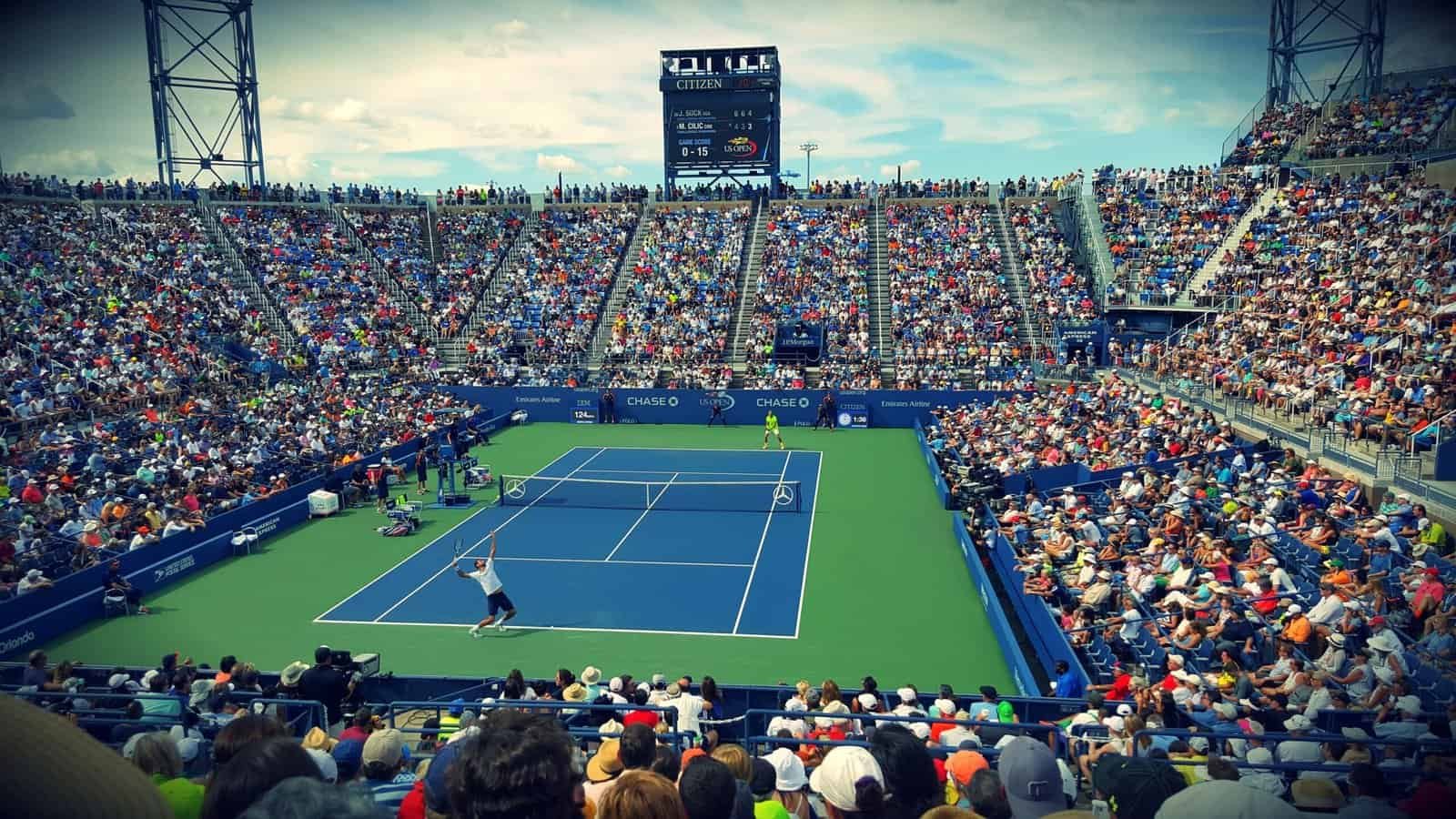
The Weight of the Grass: Why Defending a Wimbledon Tennis Title Is The Ultimate Mental Test

The Wimbledon tennis championships occupy a unique place in the sporting calendar. While the rest of the tour moves relentlessly from one surface to another, SW19 remains anchored in tradition, ritual and pressure unlike anywhere else in professional tennis.
The tennis calendar moves with relentless speed, but while the rest of the tour shifts seamlessly from the clay of Paris to the hard courts of New York, Wimbledon remains entirely unstuck in time. The tournament opens not with a staggered schedule of anonymous qualifiers, but with a strict, century-old mandate: on the first Monday of the championships, at precisely 1:00 PM, the defending men’s singles champion takes to Centre Court.
Few tournaments place greater demands on players than Wimbledon tennis, where tradition, pressure and surface conditions combine to create a unique competitive environment. It is a beautiful tradition, but it is also a tactical trap.
You are stepping onto a surface that is completely pristine, entirely unplayed on for an entire year, under the gaze of an audience that expects flawless execution. For the previous year’s winners, this moment is less about executing a game plan and more about surviving the psychological weight of the grass.

Wimbledon tennis and the biomechanical shift
To understand why defending a Wimbledon title is so volatile, one must understand the surface itself. Modern professional tennis is built on baseline sliding. On clay and hard courts, players routinely slide into their shots, using the friction of the surface to brake, stabilize, and change direction.
Grass refuses to cooperate with this movement profile. This is one of the defining characteristics of Wimbledon tennis and a major reason why even elite players can struggle to adapt during the short grass-court season.
On grass, the footwork logic reverses:
- The friction variable: The surface is slick, fast, and low-bouncing. Small movements require absolute precision; a single micro-slip ruins a hitting posture.
- The center of gravity: Players must stay constantly low, bending at the knees rather than the waist to handle balls that skink off the turf.
- The kinetic chain: Power cannot be generated by waiting for the ball to sit up. It must be taken on the rise, stealing time from the opponent.
Because the grass season is so brief—lasting mere weeks—players have virtually no time to build muscle memory. The defending champion has to find that elite movement profile instantly on day one, while facing an opponent who has absolutely nothing to lose.
The structural breakdown of the tournament
One of the most fascinating aspects of Wimbledon tennis is how dramatically the playing surface evolves over the course of the championships.
The Evolution of Centre Court
Week One: Pristine Grass
Fresh perennial ryegrass creates a slick, fast-playing surface with low bounces and unpredictable skids. Players who serve well, slice effectively and move confidently to the net are often rewarded.
Week Two: The Worn Baseline
As the grass wears away around the baseline, exposed soil produces a higher and more predictable bounce. Longer rallies become more common and the court begins to play closer to a traditional hard court.
The Challenge
A Wimbledon tennis champion must effectively adapt to two different versions of Centre Court within the same fortnight.
The players who survive the first week are often not the ones playing the most spectacular tennis, but those who can manage this shifting baseline. In the first four days, the ball cuts through the air and stays incredibly low. By the second Tuesday, the court looks worn, the dirt is exposed, and the ball bounces with a predictable, hard-court-like rhythm.
A champion must defend their title on two entirely different surfaces within the exact same fortnight.
The institutional pressure
There are no loud stadium announcers at Wimbledon. There are no flashing neon sponsor boards tracking your serve speed in primary colors. The aesthetic is restricted to dark green, purple, and mandatory all-white attire.
This minimalism is deliberate. The traditions of Wimbledon tennis create an atmosphere unlike any other event on the sporting calendar.
“The pressure at Wimbledon doesn’t roar. It whispers.”
For a defending champion, the weight comes from the realization that they are playing against history as much as the player across the net. The locker rooms, the walk through the clubhouse corridors lined with past champions’ photographs, and the walk out onto Centre Court are designed to remind you exactly what is at stake.
Looking at the contention grid
When looking at who can actually manage this transition, the field splits into two distinct psychological profiles:
| Attributes of a Grass Specialist | The Baseline Grinder Trap |
|---|---|
| Flat, penetrative groundstrokes that don’t sit up in the hitting zone. | Heavy topspin that loses its venom upon hitting the slick turf. |
| Intuitive forward movement and comfortable net-clearance reflexes. | Reluctance to leave the baseline, forcing defensive coverage over vast distances. |
| A reliable first serve that generates free points and short returns. | A passive second serve that gets instantly punished on a fast track. |
The winners from last year cracked this exact code—they didn’t play their standard game better; they modified their identity to match the short grass.
Why Wimbledon tennis rewards adaptability
Defending a title anywhere is difficult. Doing it at SW19 is a unique exercise in emotional control. The player who stands on Centre Court on that opening Monday cannot afford to look back at the trophy they won twelve months ago. The grass doesn’t care about last year’s history; it only rewards the feet that can find their grip right now.
More about Tennis here:
- Latest Tennis Results
- Tennis in May 2026: the Iberian-Italian generation takes Roland Garros
- 2025 Tennis Season Recap
For more on London, iconic sporting venues and the travel experiences behind the world’s biggest events, explore Traveltalk.travel.