Professional cycling’s one-race problem: the Tour de France, and everything else

Professional cycling has a structural problem: almost all of its cultural weight and commercial value concentrates in a single three-week race. The Tour de France is cycling. Everything else — the Giro d’Italia, the Vuelta a España, the World Championships, the five Monuments — matters enormously to cycling fans and barely registers with anyone else.
That imbalance shapes the sport’s economics, its calendar and its ambitions. It also explains why a sport with two billion participants worldwide remains, at professional level, a niche concern.

Why the Tour dominates cycling entirely
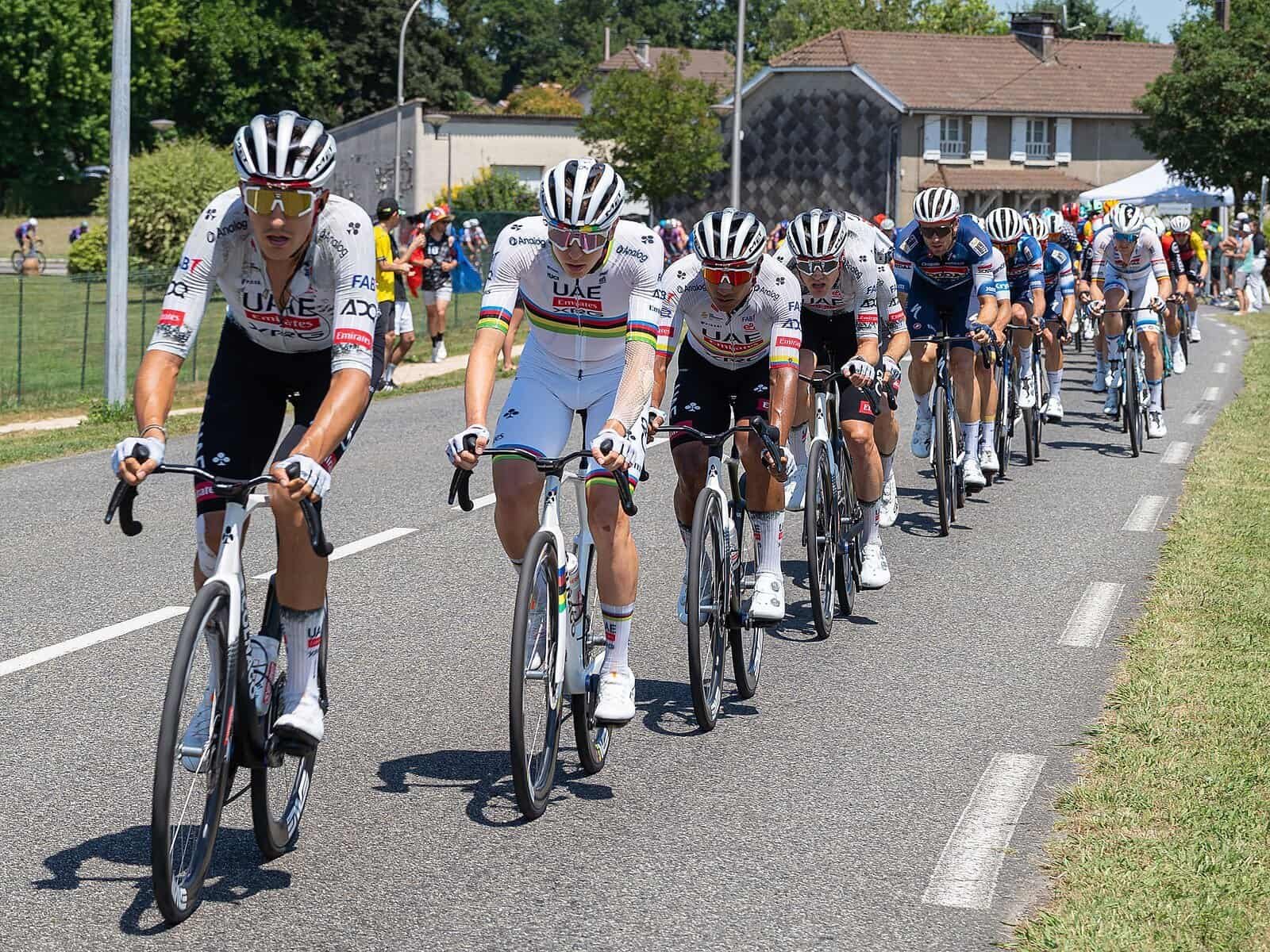
The Tour’s scale is difficult to overstate. Riders cover more than 3,500 kilometres through French mountains, countryside and villages, while some twelve million spectators line the roadsides for free — no ticket, no barrier, no equivalent anywhere in world sport. The final stage on the Champs-Élysées is summer’s most reliable spectacle, and the 2026 edition followed the same pattern.
Suffering as entertainment
The race’s drama comes from sheer brutality. Riders climb in the Alps and Pyrenees at gradients above 10% for twenty kilometres at a stretch. Time trials pit rider against clock at speeds over 50 km/h. Crashes happen daily. Burning 4,000 calories a stage, week after week, produces a spectacle that is essentially endurance of pain — and audiences respond to precisely that.
The doping shadow over cycling that never fully lifts
Cycling cannot escape its past. Lance Armstrong’s systematic cheating, and his fall in 2012, nearly destroyed the sport’s credibility — but Armstrong was a symptom rather than a cause. The doping culture was endemic: EPO, blood transfusions, cortisone abuse, entire teams operating as pharmaceutical laboratories. The biological passport system and stricter testing have reduced cheating without eliminating it, and scepticism still surfaces whenever a rider produces something superhuman.
Professional cycling’s peculiar commercial model
Unlike football or basketball, where the best players generate vast individual wealth, cycling is a team sport in which leaders such as Pogačar, Vingegaard and Van der Poel earn modest millions while domestiques — world-class athletes in their own right — make between $50,000 and $150,000 a year. Teams survive on corporate sponsorship: bike manufacturers, banks and technology companies funding entire squads in order to advertise during races.
Prize money is small relative to the sport’s profile. The Tour winner receives €500,000 — respectable, but a fraction of a tennis Grand Slam or a golf major. Riders earn from salaries, not victories, which produces the strange situation where winning is not necessarily the most profitable outcome if you are well paid to support someone else.
Women’s cycling, finally arriving
Women’s cycling spent decades as an afterthought. The Tour had no women’s race until 2022, and even now it runs eight stages against the men’s twenty-one, with prize money and salaries at a fraction of the men’s level. Yet the Tour de France Femmes sold out spectator areas and drew strong television ratings, demonstrating that the commercial potential was always there — it simply had never been promoted.
The rest of the calendar
The Grand Tours — the Giro d’Italia in May and the Vuelta a España in late summer — are prestigious races that draw a fraction of the Tour’s attention. The Monuments, five one-day classics including Milan-San Remo, the Tour of Flanders and Paris-Roubaix, command fierce regional devotion and limited global interest. The World Championships crown road race and time trial champions in the rainbow jersey each year, and the Olympic road race arrives every four years mattering mostly for national pride.
A European sport that struggles to travel
Professional cycling, governed by the UCI, remains essentially European. Belgium, France, Italy, Spain and the Netherlands produce most of the top riders and host most of the significant races. Attempts to expand — the UAE Tour in the Middle East, the Tour of Guangxi in Asia, the Tour of California in the United States until it folded in 2019 — have produced mixed results at best.
The participation base is enormous but almost entirely recreational. Of the two billion people who ride bikes, virtually none are racing; they are commuting, exercising or touring. The gap between recreational cycling and professional racing is wider here than in almost any other sport. Indoor platforms such as Zwift and the Peloton phenomenon created new engagement during the pandemic that has persisted, though whether it converts into professional race viewership is still unclear.
What has to change
Cycling’s future depends on preserving the Tour’s mystique while building the profile of everything around it. The Tour de France Femmes offers real hope on gender equity. Riders like Pogačar and Wout van Aert bring a personality the sport historically lacked. But until cycling creates several marquee events that casual audiences genuinely care about, it remains the Tour de France — and everything else competing for what’s left.