More Than a Tournament: Wimbledon as an Institution

Every summer, the international sports calendar undergoes a strange temporal shift. For two weeks, the hyper-commercialized, neon-lit landscape of modern professional tennis retreats into a quiet corner of South West London.
Few sporting events are defined by their rituals quite like Wimbledon traditions, which continue to shape the tournament’s identity more than a century after the championships first began.
At the All England Lawn Tennis & Croquet Club, there are no flashing electronic sponsor boards lining the courts. There are no corporate naming rights attached to the stadium. Instead, there is dark green windbreak canvas, purple petunias, and an absolute obsession with historical continuity.
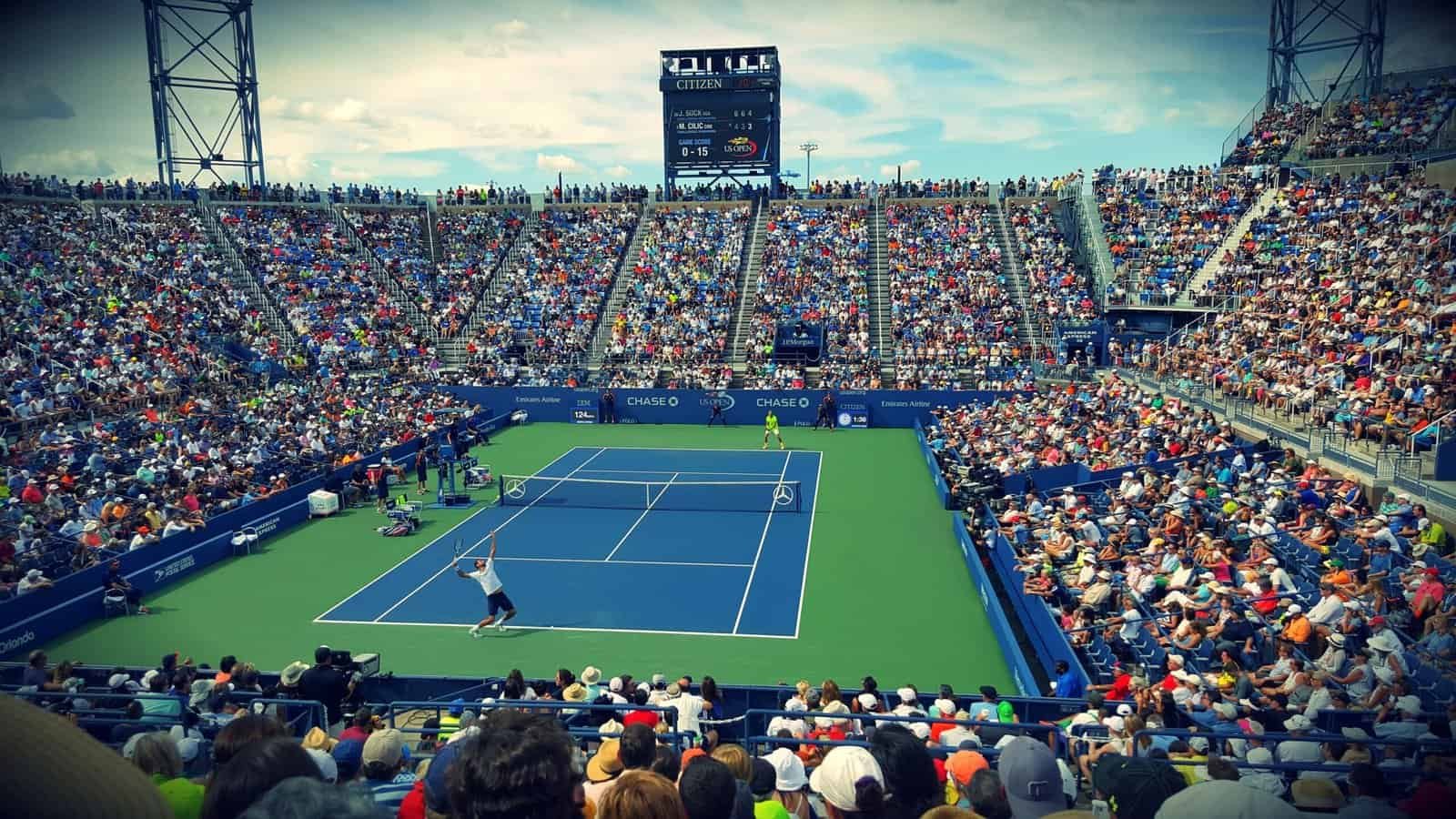
Wimbledon is not merely the oldest Grand Slam in the world; it is a meticulously managed secular institution. While tournaments like the US Open or the Australian Open position themselves as high-octane entertainment products, Wimbledon operates on a different thesis: it treats itself as a timeless cultural estate.
By aggressively enforcing structural boundaries and limiting commercial excess, the tournament has achieved the ultimate luxury paradox—it remains globally dominant by refusing to change with the times.
Wimbledon Traditions and the All-White Rule
In an era where sports apparel brands dictate tournament aesthetics with loud, fluorescent color palettes designed to pop on smartphone screens, Wimbledon remains fiercely monochrome.
The rule is uncompromising: players must dress “almost entirely in white” from the moment they step onto the court grounds. “White” explicitly does not include cream or off-white. The restriction is so absolute that multi-million-dollar footwear contracts are routinely overridden if an outsole features a strip of color.
The Visual Language of Wimbledon Traditions
What You See
Dark green courts, purple accents, immaculate ryegrass and the famous all-white dress code create one of the most recognizable visual identities in sport.
What You Don’t See
Oversized sponsor backdrops, intrusive on-court branding and entertainment-driven distractions are deliberately kept to a minimum.
The Result
These Wimbledon traditions create a viewing experience that feels timeless, placing the focus squarely on the players and the sport itself.
This is not simple Victorian nostalgia; it is brilliant brand preservation. By removing commercial visual noise and forcing athletes into a uniform canvas, Wimbledon shifts the focus entirely onto the geometry of the sport. The contrast of crisp white linen against an immaculate patch of green grass creates an instant, high-end editorial frame. It makes the tournament immediately recognizable without needing a single logo to announce its presence.
The Wimbledon Experience: Understanding The Queue
Most elite sporting events allocate their prime tickets via corporate hospitality ballots, dynamic pricing algorithms, or high-speed online queues that sell out in milliseconds. Wimbledon retains a system that defies modern digital efficiency: The Queue.
Country and Town House
Every day of the tournament, thousands of fans pitch tents in Wimbledon Park, forming a highly disciplined, overnight village. They sleep in the grass, wait for hours in the morning chill, and move in single-file lines to purchase a limited allocation of on-day show court tickets.
Country and Town House
The Queue: A Wimbledon Tradition Unlike Any Other
Overnight Commitment
Thousands of fans camp in Wimbledon Park to secure the chance of purchasing same-day tickets.
Shared Etiquette
The Queue operates through a culture of patience, courtesy and voluntary discipline rather than strict enforcement.
The Reward
For many visitors, access to Centre Court or a show court is only part of the experience. Participating in The Queue has become one of the defining Wimbledon traditions.
The Queue has its own printed code of conduct, its own honorary stewards, and its own quiet social hierarchy. For the purist, this process is an essential rite of passage. It changes the nature of being a spectator. By forcing people to invest time and physical presence rather than just capital, the institution ensures that the crowds filling the historic stands are deeply knowledgeable, deeply patient, and emotionally invested in the game’s quiet rhythms.
Why Wimbledon Remains Different
The surface itself is a living, fragile ecosystem. Wimbledon remains the only Grand Slam tournament still contested on natural grass—specifically, 100% Perennial Ryegrass, cut to an exact height of 8 millimeters.
The Year-Round Care Behind Centre Court
July
The moment the championships end, preparation for next year’s tournament begins. The courts are cut back and assessed for reconditioning.
Late Summer & Autumn
The grass is re-seeded, rolled and carefully maintained to establish a healthy playing surface for the following season.
Spring
Ground staff monitor growth, soil conditions and court firmness while maintaining Wimbledon’s exacting standards.
June
The famous ryegrass is cut to approximately 8 millimetres, creating the distinctive playing surface that defines Wimbledon traditions.
The preparation for the next championship begins forty-eight hours after the men’s singles final ends. The courts are systematically scalped, re-seeded, rolled, and treated throughout the British winter.
During the tournament fortnight, ground staff measure soil moisture, turf hardness, and ball bounce profiles daily. The grass changes character as the days progress, transforming from a slick, emerald velvet in the first round into a dusty, baseline-worn battleground by the second Sunday.
This transformation dictates the tournament’s narrative. To win here, an athlete must cooperate with a surface that is actively dying beneath their feet.
The Institutional Balance Sheet
Wimbledon’s refusal to commercialize its primary surfaces seems counter-intuitive from a modern sports business perspective. Yet, this restraint is exactly what cements its premium valuation.
| Asset Class | Wimbledon Approach | Commercial Output |
|---|---|---|
| Sponsorship | Limited to long-term historic partners (Slazenger, Rolex, Pimm’s) | High-end brand alignment that never feels cheapened or cluttered. |
| Broadcasting | Strict curfew limits (23:00 BST) and traditional presentation | Creates focused appointment viewing rather than endless, 24-hour content stream fatigue. |
| Technology | Integrated silently (e.g., electronic line calling data delivery) | Technology serves the accurate execution of the sport without disrupting the traditional landscape. |
The Preservation of Class
Ultimately, Wimbledon succeeds because it treats tennis as a permanent craft rather than an ephemeral trend. While the other three Grand Slams adapt their environments to match the shifting sensibilities of casual sports fans, the All England Club demands that the world adapt to its terms.
When you see the champions ascend the steps of Centre Court to receive their trophies in front of the Royal Box, you are looking at an image that has remained structurally unchanged for over a century. The lines are still painted by hand, the strawberries are still sourced from Kent every single morning, and the grass remains the ultimate equalizer. It is an institution that survives because it understands that in a world obsessed with constant evolution, true luxury lies in absolute permanence.
More Wimbledon and Tennis Coverage
- The Wimbledon 2026 Contenders: Decoding the Grass-Court Speculators
- The Weight of the Grass: Why Defending a Wimbledon Tennis Title Is The Ultimate Mental Test
- Tennis in May 2026: the Iberian-Italian generation takes Roland Garros
For more on London, iconic sporting traditions and the destinations behind the world’s greatest events, visit Traveltalk.travel.