
The US Open has stopped being the last major and started being a different one
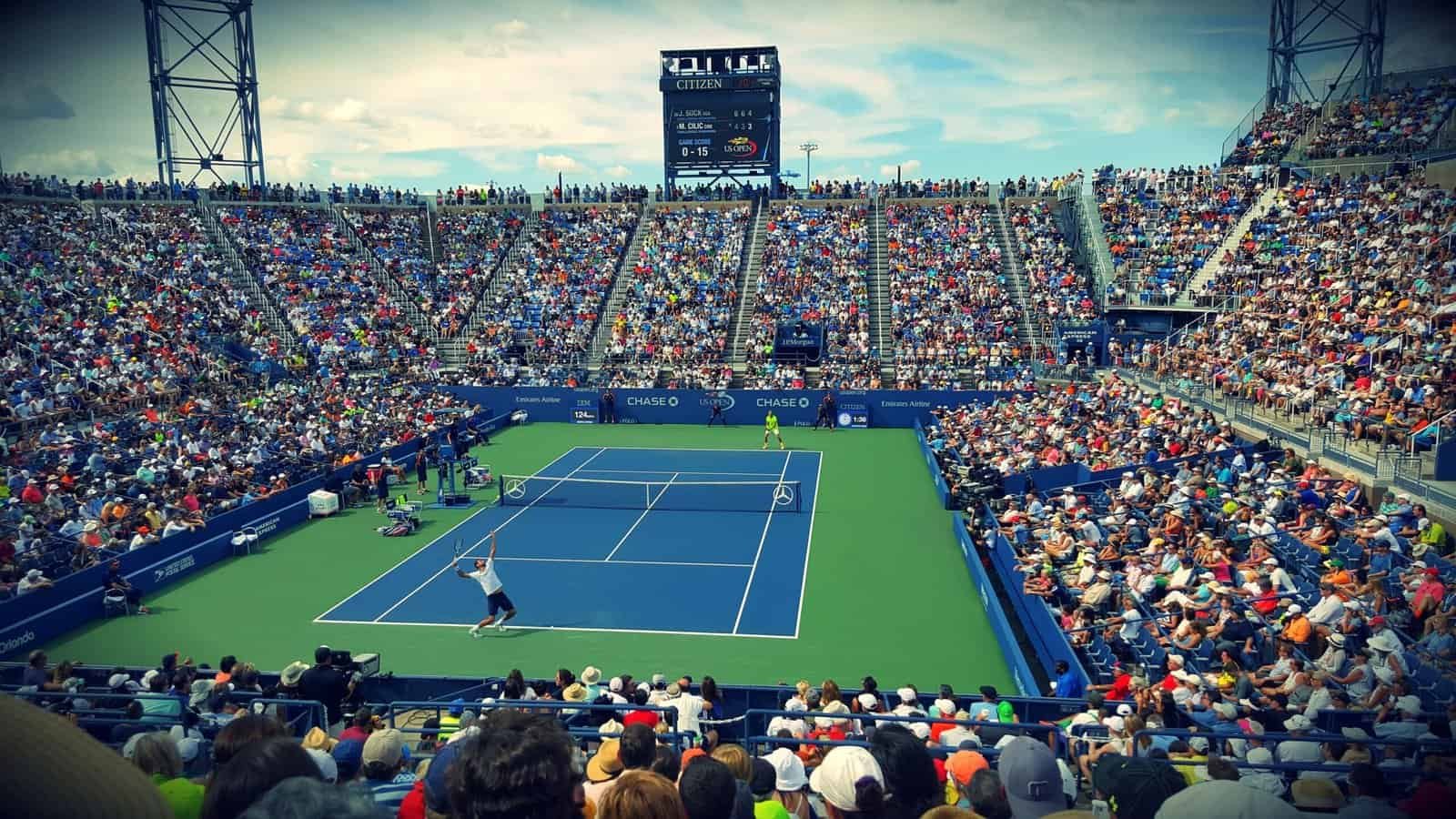
The US Open is …opened. The main draw at Flushing Meadows is under way — 128 men and 128 women in the loudest tennis tournament in the world. That is the part everyone knows. The part worth a few minutes is what has quietly changed about the fortnight around it, because the US Open 2026 is no longer simply the fourth major on the list.
The US Open now starts before the tournament
Key Changes Leading to the US Open 2026
The gates at Flushing Meadows opened on 23 August. The main draw began on the 30th. That gap — the seven days the USTA calls Fan Week, 23 to 29 August — used to be qualifying and very little else: a few hundred spectators, players ranked in the 100s and 200s fighting for a main-draw slot in front of almost nobody, and practice courts you could stand beside.
It is not that any more. Fan Week now carries qualifying, open practice sessions, the Arthur Ashe Kids’ Day — moved to Sunday the 23rd this year, as the thing that opens the whole event — and a Mixed Doubles Championship that has been pulled out of the main draw entirely and rebuilt as its own event inside that week.
That last decision is the interesting one. Mixed doubles at a major was, for decades, a thing that happened in the background — played by singles players who had lost early and had a week to fill, watched by whoever was passing. Moving it out of the main fortnight and giving it its own stage is an admission that it was never going to compete for attention against a men’s singles quarter-final, and a bet that it can hold a crowd when nothing else is on.
The 2026 edition went further again: a free-to-attend qualifying round on Monday 24 August, feeding a 16-team main draw that ran through to its final on Wednesday the 26th with a million dollars on it. Karolína Muchová and Jakub Menšík won it, beating Belinda Bencic and Flavio Cobolli 6–3, 1–6, [10–6] — two singles players, settled by a match tie-break, in front of a crowd with no singles to watch instead. Whether it holds up in a year when the calendar squeezes harder is the question the format has not been asked yet. But it means the practical answer to when does the US Open start is now two different dates depending on what you want to watch, and most calendars still print only one of them.
Why the grass matters more here than anywhere
Hard courts do not forgive. Clay slows a ball down and gives a defender time; grass rewards the player who ends points early and punishes anyone who lets a rally develop. A hard court does neither favour. It returns the ball at close to the speed it arrived, which means the player who hits harder is simply rewarded for hitting harder, with no help from the ground.
It also grips. A hard court is engineered to hold a shoe in place, which is what makes the modern habit of sliding across one so strange — and, once you understand the physics of it, so much more impressive than it looks. We have written that up separately: nobody taught them to slide on a hard court, and the laboratory work explaining why it is possible at all is genuinely counter-intuitive.
What it produces is a particular kind of attrition. Best-of-five sets on a surface with no give, in New York humidity that does not break until September, across a draw of 128 that requires seven wins for the title. The tournament does not select for the best player. It selects for the best player who is still standing on the second Sunday, and those are different questions.
The sport knows it, too. The main draw is spread across 15 days rather than the traditional 14, which gives the early rounds more room and the players who keep winning slightly more recovery than they used to get. You do not add a day to a fortnight unless the fortnight was doing damage.
The night session is the format, not a scheduling detail
Arthur Ashe Stadium holds close to 24,000 people, more than any other tennis venue on earth, and the night session there is a genuinely different sport from the same match played at two in the afternoon.
The ball slows in the cooler air. The lights flatten depth perception. And the crowd, by that hour, has had a full day of the grounds and behaves accordingly — this is the one major where a partisan crowd can visibly move a match, and where players either feed on it or come apart in front of it.
It is worth watching for on purpose. A player’s record in Ashe at night, separated out from their record at the tournament generally, tells you something their ranking does not.
Latest Tennis Results
What we are covering from US Open
We will follow the fortnight through the women’s final on Saturday 12 September and the men’s on Sunday the 13th — 22 days of tennis end to end, once Fan Week is counted — with the emphasis where we always put it: not the score, which you can get anywhere within seconds, but why a match went the way it did.
That means the tactical shifts between sets that decided things before the scoreline showed it. The scheduling decisions — who got Ashe, who got a side court, who played back-to-back days while their opponent had a rest. And the pattern across the draw that is only visible once a few rounds have gone.
More in the tennis section, and every date that matters on the World Sport Calendar. Subscribers get the month ahead before it reaches the site.
Verification note. Dates and format confirmed 23 August 2026 and re-checked 30 August against the US Open’s own published schedule and results: Fan Week 23–29 August, Arthur Ashe Kids’ Day on the 23rd, Mixed Doubles Championship qualifying on the 24th and the event completed 24–26 August, singles main draw 30 August to 13 September, 22 days end to end. The mixed doubles dates in the first version were wrong — the event finished on the 26th, not the 27th — and are corrected here. Two further claims in an earlier version were corrected on checking — the Fan Week programme is confirmed rather than merely reported, and a line stating the fortnight has “no rest days built in” was wrong and has been removed: the main draw was extended to 15 days precisely to add recovery room.
Not stated here: entry lists, seedings and favourites. Player participation changes up to the draw, and we do not print a name we have not confirmed will be there.
Try our other leisure publictions, travel and personal well-being
Eight sites, one family — travel, wine, sport and sharper thinking. Explore the rest of the universe.


